 |
 |
 |




| New Pieces from JA New York Winter | ||||||||||||||||||||||||||||||||
The JA New York Winter Show took place last month, providing brands
and designers the opportunity to show off their new designs and
capitalize on some of the trends for the year. The pieces on the
show floor also gave some idea what stores will be stocking and
consumers will be buying in 2015. |
||||||||||||||||||||||||||||||||
 |
||||||||||||||||||||||||||||||||
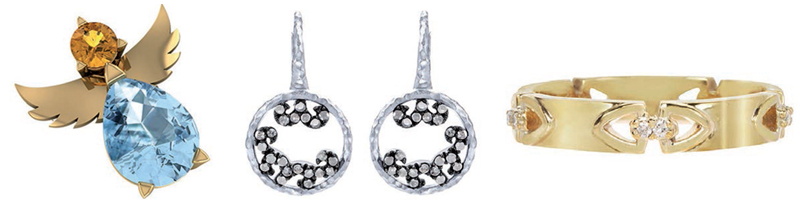
| Left to right : - Nicofilimon's
18-karat yellow gold "Wellbeing Angles" pendant features
citrine and blue topaz. The idea behind the Wellbeing collection is
that the stones in each contribute to the wearer's well-being in a
different way; the stones in this here are for creativity, balancing
feeling and helping to express ideas. -There stering silver and diamond earrings come from Gabriel & Co.,'s Diamond collection ($315) - Proposition Lave's diamond eternity stack ring is made in 14-karat yellow gold ($495). The company donates 10 percent of its profiles to organizations that support marriage equality, gay rights, LGBT youth and anti-bullying campaigns, and HIVAIDS activism. |
||||||||||||||||||||||||||||||||
If
the show was any indication, stacking will continue to be in, ear
pieces are still having their day, and coloured gemstones will dazzle
in the year to come. Gold and bold metal pices also made a strong
showing. |
||||||||||||||||||||||||||||||||
 |
||||||||||||||||||||||||||||||||
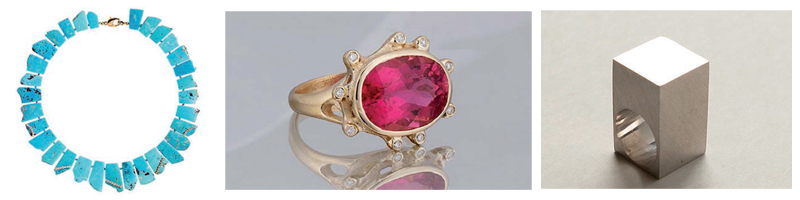
| Left to right : This "Throwing
stones" turquoise choker from Zaiken Jewelry has diamond accents
and is set in 18-karat yellow gold ($5,640) - Andrius Krulis displayed this 18 karst yellow gold ring boasting a 9.37 carat pink tourmaline accented with diamonds ($8,900) - Another Planet's cube "Pillar" ring made in silver ($451) |
||||||||||||||||||||||||||||||||
 |
||||||||||||||||||||||||||||||||
| 6th Edition of Antwerp Diamond Trade Fair | ||||||||||||||||||||||||||||||||
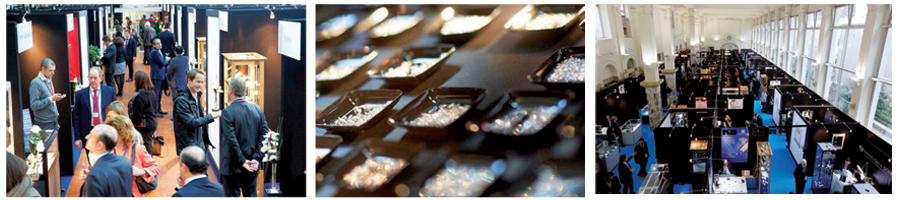
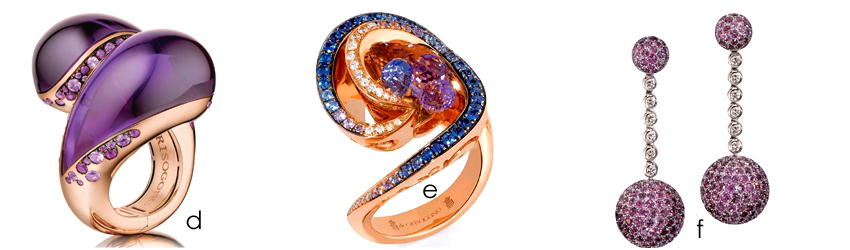
The Antwerp Diamond Trade Fair (ADTF), the unique by-inviation-only international loose diamond trade show, will open on Sunday, February 1st and close on Tuesday, February 3rd, 2015. The ADTF's dates are in sync with those of other prestigious jewellery industry events in the region and thus enable visitors to the ADTF to plan their itineraries effectively. The ADTF, a joint initiative of the Antwerp Diamond Bourse, the Diamond Club of Antwerp and the Antwerp Diamond Kring exchanges, is held on the bourses' trading floors which are converted into three elegantly designed exchanges, is held on the bourses'trading floor which are converted into three elegantly designed exhibition spaces for the event, hosting around 90 of Antwerp's leading diamond manufacturing and trading firms, displaying a very wide variety of polished diamonds. . |
||||||||||||||||||||||||||||||||
|
||||||||||||||||||||||||||||||||
|
||||||||||||||||||||||||||||||||
|
||||||||||||||||||||||||||||||||
|
||||||||||||||||||||||||||||||||
| A Gem of Many Names | ||||||||||||||||||||||||||||||||
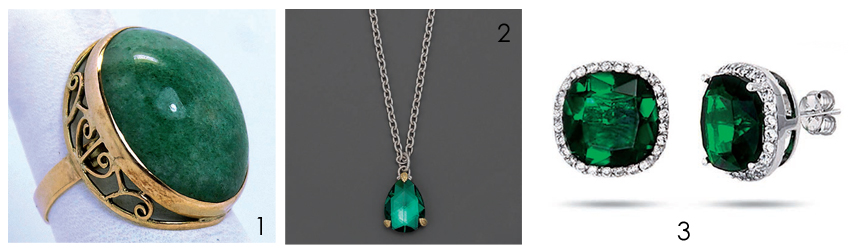
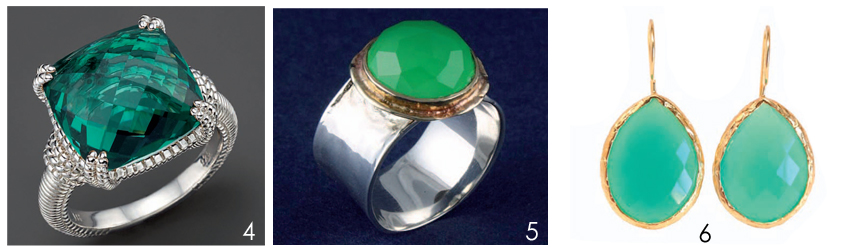
Green quartz is commonly known as paraiolette, the name derived
from the Greek word meaning "leek stone," which describes
the gemstone's pale green colour. Its popularity owes much to the
fact that even in its lighter shades, the stone's colour has a lot
of depth. Designer also like that it is available in large sizes,
is durable and affordable. While many people in the industry still referto the stone as green or greened amethyst, those terms are a misnomer because amethyst is defined only as violet or purple quartz. The name probably was coined because most prasiolite on the market is a treated amethyst, in which the green colour emerges as a result of heat and radiation treatments. Mike wong of Wonder Sources, Inc. a 30-year gemstone wholesale, offers anotherexplanation as to why thename became widely explonation as to why the name became widely used "I think the gemstone industry may use the term green amethyst to help people understand it is a natural, semiprecious stone, not synthetic, " he says. "When it first came on the market, suppliers offered it as natural green amethyst. As I got to know more about the stone, I learned this was not the case because it was actually a treated stone," says Amar J. Jain, president of Fine Gems NY, Inc. "In the begining, they didn't tell you that, " echoes Wang. Sourcing Natural Prasiolite Quartz is one of the world's most abundant minerals, making up about 12 percent of the earth's crust. The white or colourless variety is most common. Natural green prasiolite does exist; however, it is very rare. It is formed as a result of a combination of heat and radiation naturally occurring within the each. Small deposits of this naturrally formed green praiolite have been found in Canada, Namibia, Poland, Brazil and near the California and Nevada border in the United States. |
||||||||||||||||||||||||||||||||
|
||||||||||||||||||||||||||||||||
Since natural prasiolite is so rare, almost all of the prasiolite on the market is treated amethyst that contains ferrous iron. When heated, amethyst usually turns yellow - the most common, marketed as citrine - orange or brown due to its iron compounds. However, amethyst that contains ferrous iron will change to green after being treated. Most of this quartz material containing ferrous iron comes from the Minas Gerais area and the Amazon, both in Brazil. Bringing Forth the Colour Gemstones are often treated with radiation and heat to enhance their colour. For bigger companies that are treating larger volumes of gemstones at a single time. Hace substantial inventory and the sophisticated equipment required, the radiation process can take place in one of two ways : either in a nuclear reactor that is neutron bombardment or in an accelerator that is electron bombardment. While these methods are more expensive, the advantage is that the colour achieved is often stronger. These processes are regulated by the Nuclear Regulatory Commission (NRC). |
||||||||||||||||||||||||||||||||
 |
||||||||||||||||||||||||||||||||
|
The more popular way to produce prasiolite - and simpler because
it does not involve NRC regulation - is by gamma ray exposure in
a cobalt-60 irradiator. In this method, the stones are placed in
a thick-walled container in which gamma rays move the electrons
from their normal positions within the stone. The colour change
happens as a result of the new electron formation and the change
of the atoms around them. After the treatement, the material is
heated so that the color doesn't fade. Prasiolite has been on the market in large quantities for about 20 years. Approximately 3 to 4 tons a year are produced worldwide. The annual volume of amethyst production worldwide. The anual volume of amethyst production, by comparision, is double that amount, According to Mykel Rieth, gemstone cutter and owner of R Gems, Inc. In New York City., prosioliite was found by accident. "Some manufacturers in Brazil were treating amethyst to p roduce lemon citrine whem all of a sudden the colour happened," he says . The new shades filled a niche in the market for a light-hued and affordable green stone. "There was no other stone we could find in that shade range, so it became very popular, "says Jain, who has been selling the stones for about nine years. |
||||||||||||||||||||||||||||||||
 |
||||||||||||||||||||||||||||||||
The Price is Right
|
||||||||||||||||||||||||||||||||
|
||||||||||||||||||||||||||||||||
| The world of the Cushion Cut | ||||||||||||||||||||||||||||||||
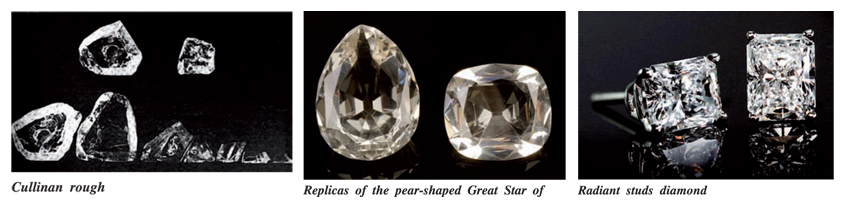
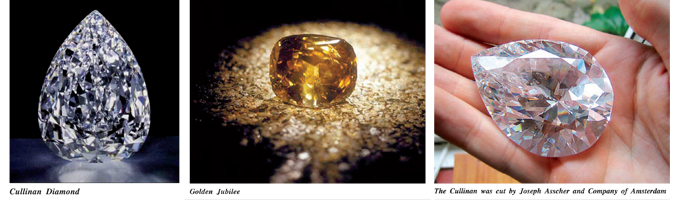
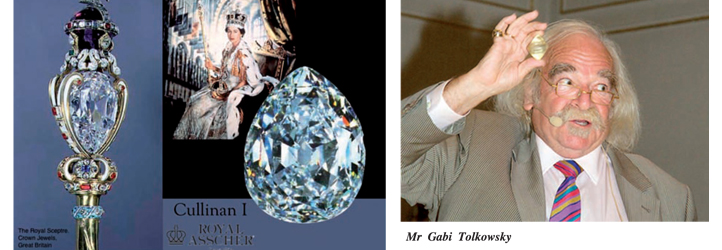
Cushion cut diamonds are known throughout the world, including the
Cullinan ll, embedded at the top of the crown of the British Queeen
Elizabeth II, the largest polished diamond in the world, the Golden
Jubilee, the Tiffany's diamond that become the symbol of the famous
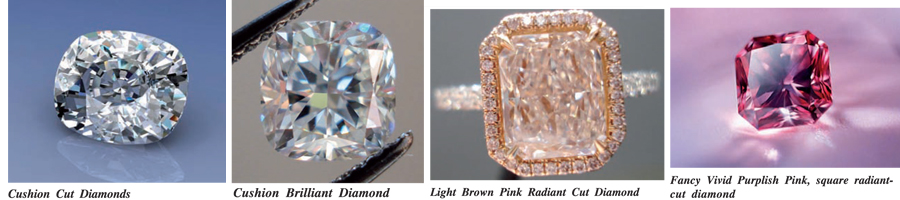
brand; the Yellow Rojtman, and many others . We might imagine that the cushion cut looks like its namesake - a diamond in the shape of a pillow. But pillows are generally completely round, or else completely rectangular; but the cushion cut is neigther here not there, or rather, both. If we try to come up with a single definition for the cushion cut, we would say it is a square - or rectangle-shaped cut with rounded corners, like an oval, and so are the sides of most. |
||||||||||||||||||||||||||||||||
 |
||||||||||||||||||||||||||||||||
Other Names In the jewellery market, there are those that call the Cushion Cut the "Pillow Cut", and others that call it "Candelight Diamond", a term which reminds us that diamond cutting was developed at a time when the sparkle of a diamond was observed by candlelight, not electric light. Some diamond traders call it "Old Mine" or "Old Miner", a popular but inaccurate name which came into usage in the 18th century, at a time when Brazil was the world's largest supplier of rough diamonds. Brazilan dodecahedronal rough diamonds were ideal for the cushion cut. Only in the 19th century, when Africa became the world's largest supplier of rough diamonds, did octahedronal rough diamonds from the Afrcan continent lead to the development of the round cut, which became the most accepted standard cut in the diamond trade. (Dodecahedron; an equilateral polyhedron with 12 facets; each one of which is a equlateral pentagon, a pentagon with sides of equal length. Dodecahedron have 3o sides and 20 vertices. Octahedron; a polyhedron with eight facets, an 8-sides rough diamond or a diamond sawed to have equilateral geometry. All sides of the stone are equal in size, like the structure of gems found in nature, like quartz and sapphire. This is the origin of the octahedron category of sorting diamonds that are shaped like crystals). |
||||||||||||||||||||||||||||||||
 |
||||||||||||||||||||||||||||||||
"In recent years, the cushion cut has found renewed favour
and widespread demand. So much so that just two years ago, the worlds
leading gemmological laboratory, the USA's GIA decided to define
it in an orderly fashion - no small feat for a cut in which each
stone can look so different from one another, to the point that
it's almost impossible to find two that are identical," says
Avner Zofyov. |
||||||||||||||||||||||||||||||||
 |
||||||||||||||||||||||||||||||||
Cushion History During the 20th century, one could mainly find cushion-shaped diamonds at estate sales and public auctions. Herbert Tilander, chronicier of cushion history, says that most diamonds cut during the Baroque period were Cushions that were cut in this way in order to improve Old Table Cuts, most of which had corners that were dull or missing altogether. In order not to lose too much of t the stones mass, the corners were rounded, giving the stone a larger appearance than it it had sharp edges. According to the GIA, prior to the diamond industry adopting the modern round cut in the 1940s, Many different round style cuts were prevalent. GIA founder Robert Shipley describes the standard round diamond as having 58 facets, calling all round cuts that deviate from this stanard a 'Modified Brilliant', or a variation on a round cut or with a modified brilliant ' or a variation on a round cut. When the round cut standard became the most desirable among American consumers, the industry began to debate whether diamonds appear nicer with a round cut or with a modified brilliant cut. Gur Sela explains: "The round cut is an exact science. When you are working on a round stone, you know for certain that it you reach the level of Triple X, you'll achieve the maximum amount of light, However, with the cushion cut, you can have a stone with a cut level of "Good", and it reurns much more light than an Triple X. Of late, the GIA instruction manual explains, a number of variations have been developed in order to achieve a greater mass, or to improve the appaarance of the stone. The most dramatic variations received the name 'Cushion Modified Brilliant'. Other more subtle variations are generally the addition of facets on the pavilion. Underneath the girdle. In the shape of a fan or a half moon. |
||||||||||||||||||||||||||||||||
 |
||||||||||||||||||||||||||||||||
'In the four subcategories of the GIA, there are cushion diamonds
that look different from one another," says Gur Sela, "A
request for one shape or another is a matter of fashion trends.
If Tiffany's, Cartier or another brand name offers a Square CUshion
on the market, the demand for square Cushions will increase. "The decision regarding cutting cushions in one shape or another is generally decided according to the rough diamond that the manufacturer acquires," says Avner Zofyov, "However, when there is a demand for a certain shape of cushion cut, the manufacturer will prefer to lose a larger percentage of the diamond in the process in order to fill the order. These days, for example, there is a huge demand for Altschiff CUshion Cuts," (Alttschiff; Step-and-table triangular cuts (like rosetta stones), developed in the Netherlands in the 15th and 16th centuries. This cut is similar to the Brilliant and is attributed to Prozy, an Italian of the 17th century. The style, in its various incarnations, was prevalent in Europe until the development of the modern cutting styles). The standardization of round diamonds leads to a situation where the profit margins is very small. "Everyone knows the prices, everyone knows the criteria. everyone owns a price guide, and as a result, the profit margin is minuscule," says Avner Zofyov. "The cushion cut is artistry, and it's appropiate for someone looking for a niche in the diamonds market where there are no exact prices." |
||||||||||||||||||||||||||||||||
The
Markets "The European market has always been characterized by a demand for cushion and emerald cuts," says Avner Zofyof. "The American market has started to notice cushions, apparently in the wake of a marketing campaign by one of the large brands. Today there is a ravenous demand in the U.S. market for cushions. Lately, the Southeast Asian markets have begun to express interest in cushion cuts. These days they also understand that cushions not only allow for more efficient retention a stone's mass, but also looks prettier and more elegant." |
||||||||||||||||||||||||||||||||
| Appropiate
for Fancy Colour |
||||||||||||||||||||||||||||||||
|
||||||||||||||||||||||||||||||||
| The Spirit of Jadeite Carving | ||||||||||||||||||||||||||||||||
Jade is often considered synonymous with China. The country's worship and appreciation of jade can be tracked back about 8,000 years. Nephrite dominated the jade trade until jadeite was first imported into China from Myanmar. Exactly when this happened is still debatable, but most people agree that it was later than the Ming Dynasty (around 1475). For a long Time, jadeite
was traded mainly out of the palace. When the Empress Dowager Cixi
ruled China at the end of the Qing Dynasty (1861 to 1908), she started
to collect high-qualily jadeite from all over the country to satisfy
her own desires. This trend also swept over the whole royal family
and the upper social class. By 1908, jadeite was already the most
expensive jade said in Beijing’s most famous antique market,
Liu Li Chang. Jadeite and nephrite have shared high market status
ever since. |
||||||||||||||||||||||||||||||||
 |
||||||||||||||||||||||||||||||||
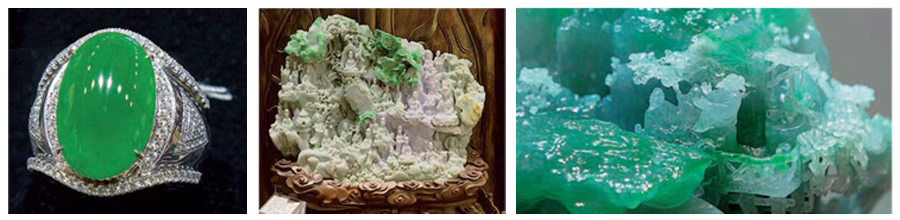
| left to right : -The classic
jadeite cut is the cabochon. Some high-quality cabochon are worth
a fortune. Photo by Eric Weich ©GIA, courtesy Articleco., Ltd. -This is a typital jadeite Shan Zi, The piece preserved the original shape and outline of the rough. A Shan Zi is usually curved in three dimentions. Its large size is impressive, even when viewed from a distance. Photo by Eric Welch, ©GIA, courtesy of Mazu Jade Articleco Ltd. - High-quality jadeite is used to make 3-D carving. When examined closely, this carving displays some precise details of individual characters. Photo by Eric Welch, ©GIA Courtesy of Mazu jade Articleco, Ltd. |
||||||||||||||||||||||||||||||||
Acquiring
the material In June 2013, a group of GIA staff members visited one of southern China's jadderite hubs. In Sihul, the authors were introduced to Mr Zheng, the president of Mazu Jade Articleco Ltd and his close friend Mr Fang, the President of Jingyu Mantang jaddeite carvring workshop. These two gentlemen warmly welcomed us and hosted our visit, and showed us one of their ongoing carving projects. They obtained the jaderte they were workrng on in 2004, at a public auction in Myanmar It was seperated from an even bigger jaddeite boulder. They were not able to get the other half, which remained in Myanmar. The boulder they brought back weighed about 8 tons, and they cut it into two pieces. One is now being carved to make a huge jadderite Shon Zi. One now being carved to make a huge Jadeite Shan Zi. The other part was further divided into three pieces to be carved into the three Chinese gods: Fu Lu dnd Shou. When they purchased the rough, it had dark skin and a small window. When they brought it back and cut it open, they knew that they had won the auction gamble. The entrre piece is full of purple and green colors. They built a special working platform to accommodate the 3-ton segment along with the carves. It will be carved into a jadeite Shan Zi. Mr Fang told us that, to their knowledge, this is probably the largest Jadeite Shan Zi in Asia. Mr. Fang also pointed out that they would have profited more if they had used this materrial to make bangles with full green or purple colours are usually worth several million RMB each. They could have produced a large number of bangles from this giant piece of rough. The reason they decided to make it into a Shan Zi was that, as on an artist, Mr. Fang had always dreamed of finishing a masterpiece in his lifetime and both gentlemen sensed that this might be the opportunity to do it. |
||||||||||||||||||||||||||||||||
 |
||||||||||||||||||||||||||||||||
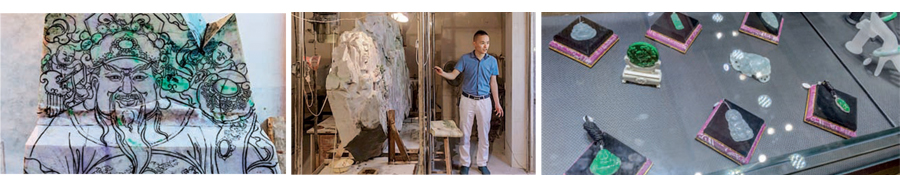
| left to right : -The god Lu
is the symbol of good fortue and high socialclass. The sketch shows
a lot of the details that will be incorporated into the finished product.
Photo by Eric Welch. ©GIA Courtesy of Jingju Mantang Jadeite
workshop - Mr. Fang introduces the ongoing project to visitor s from GIA. Photo by Eric Welch. ©GIA Courtesy of Jingju Mantang jadeite workshop - Small pendants, decoration and bracelets are typical products for jadeite market. Photo by Eric Welch ©GIA courtesy of Mazu Jade Articleco, Ltd. |
||||||||||||||||||||||||||||||||
Inspiration
and theme selection Mr. Fang is the chief designer of the piece. Working along with two other designers and six highly skilled carvers, it will probably take about 5-6 years to finish. When asked about his design inspiration, Mr. Fang become very excited. This rough set in the workshop from 2004 to 2010 becouse he could not find a suitable theme to base its design on. Then, in 2010. he attended the Shanghai Expo. In the China pavilion. he saw an amazing 3-D dynamic painting called Qingming Shanghe Tu [Along the River During the Qingming Festival). The 3-D painting inspired Mr. Fang. and he returned to Sihui the same day to plan the execution of this theme on his jaddeite rough. The original painting, Along the River During the Qingming Festival, is attributed to the great Northern Song Dynasty artist, Zhang Zeduan. It is 528 cm long and 24.8 cm high. lt shows active scenes of life in Bionjing, the capital city during the Northern Song Dynasty. From 960 to 1279, Chino was the most developed and powerful country in the world. Mr. Fang loved the idea of using his favourite jadelte rough to represent the most prosperous period in Chinas history. Since the original painting was too long to fit this jaddeite, he decided to use its most eye- catching parts. The two main scenes are the city gate and the bridge. The visiting team was shown the pencil sketch on the jaddeite and some ports that have been worked on already. Mr. Fang also showed us the back of the rough which will also be carved to represent parts of the painting. In The room next to the workshop, progress was being made on the carving of the three gods: Fu, Lu, and Shou, made from a portion of the same rough material. The first pencil sketch has been finished. Mr. Fang pointed out That The design might be changed here and There as work progresses because jadellite u distribution is very complex and it can change within centimetres. ln Chinese culture, Fu is The god of happiness and good luck, Lu is The god of fortune and social class, and Shou is The god of longevity. Decorations with These Three as The Theme can be seen everywhere and are made of a variety of materials, including china and wood. in The past, almost every family had a set of The Three in different formats or materials. According To Mr. Fang, The sizes of these carvings of The gods make Them extremely rare. Also, The material being used is of abnormally high qualiiy. This is another dream project he is working on at The same Time as The main carving. |
||||||||||||||||||||||||||||||||
 |
||||||||||||||||||||||||||||||||
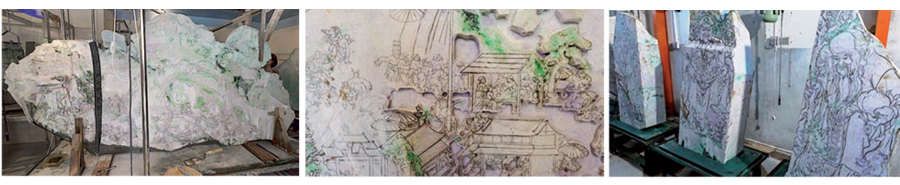
| left to right : -Workers designed a special platform for this Shan Zi. The platform allows three carvers to work on the same side at the same time. The pencil sketch and some carving work have been completed. Photo by Eric Welch, ©GIA, Courtesy of Jingyu Mantang Jadeite workshop - The original painting is full of people, which makes some of the carving detail extremely complicated. The finished product will show not only people's individual facial expressions, but also the details of their clothing and even the jewellery they wear. Photo by Eric Weich. ©GIA, Courtesy of Jingyu Mantang Jadeite workshop - Part of rough was divided into three gods, Fu, Lu and Shou. Large statues like these are very rarely seen on the market. Photo by Eric Weich. ©GIA, Courtesy of Jingyu Mantang Jadeite workshop |
||||||||||||||||||||||||||||||||
|
||||||||||||||||||||||||||||||||
|
||||||||||||||||||||||||||||||||
|
||||||||||||||||||||||||||||||||